 Chiprince
Quick links:
30+ Non-Government Scholarships (Official Links) |
Top 10–15 Best-Fit Scholarships for Nigerians |
90-Day Application Plan |
Step-by-Step Guide |
Country Breakdown |
FAQ
Internal links:
Government Scholarships for Nigerian Students |
Fully Funded Scholarships |
Common Mistakes Nigerians Make
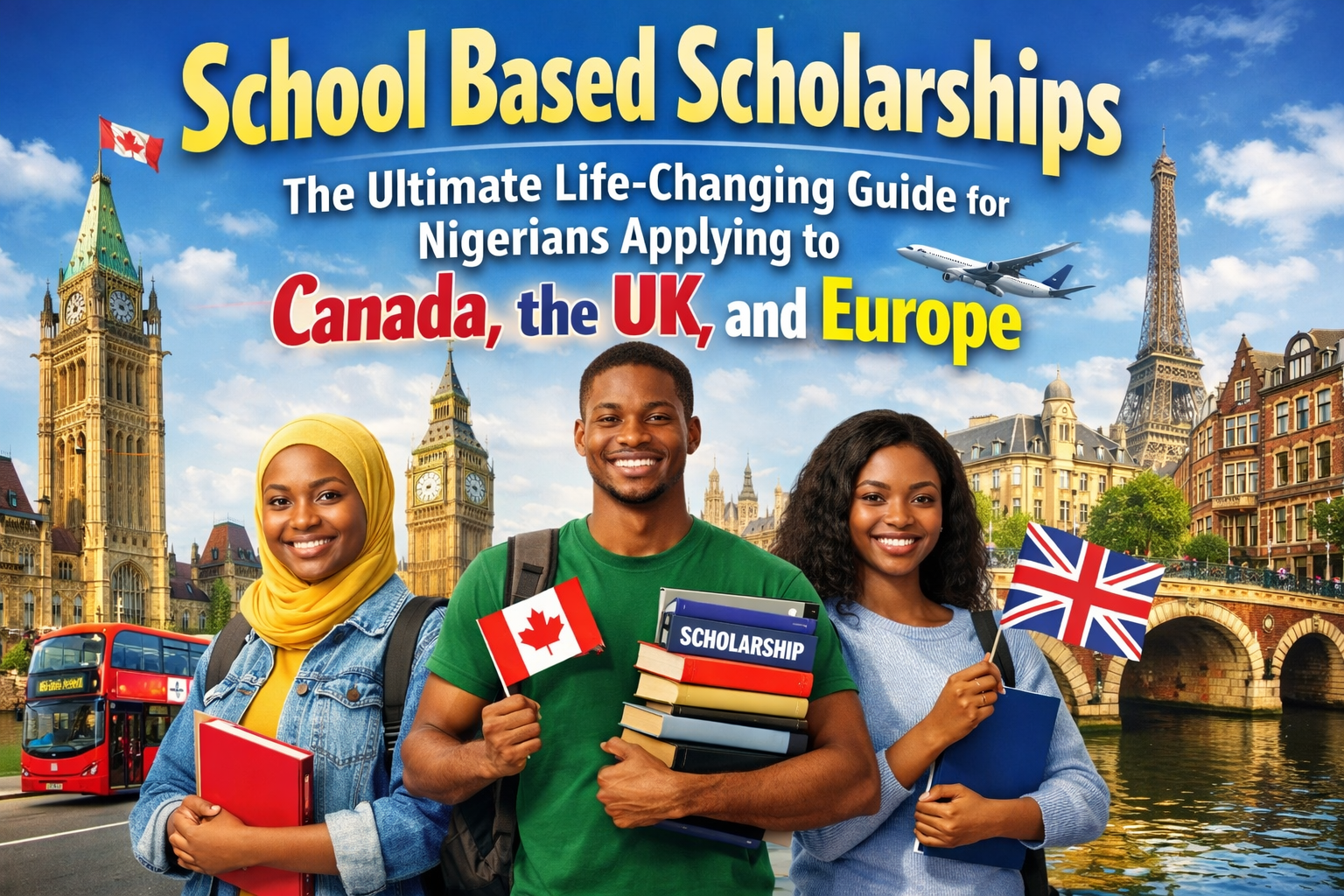
School-Based Scholarships are one of the most realistic ways Nigerians can reduce the cost of studying abroad especially in
Canada, the UK, and Europe. If you’ve ever clicked a “scholarship” post on WhatsApp or Instagram, got excited, and then discovered it was closed,
not open to Nigerians, or just a tiny discount… you’re not alone.
This guide is written for Nigerians (and other Africans) who want a clear, honest plan not hype. I’ll explain what these scholarships really look like,
why many people miss them, and how you can apply step-by-step in a way that actually improves your chances.
What you’ll learn
- How universities structure funding (and where they “hide” scholarship pages)
- The step-by-step process Nigerians use to win School-Based Scholarships
- How to write essays that sound human and convincing (without begging)
- What’s realistic in Canada vs the UK vs Europe, including visa funding expectations
- Common mistakes that cause avoidable rejection
- A shortlist of best-fit options and a 90-day plan you can follow
Disclaimer: This article is for educational and informational purposes only. Scholarship rules, award amounts, and eligibility
requirements may change without notice. Always confirm deadlines and eligibility on the official sponsor/university website and confirm
visa and financial rules on official government portals before applying or paying fees.
30+ Non-Government Scholarships (Official Links + Sponsor Names)
These are non-government scholarships (universities, foundations, NGOs, trusts, and companies). Any link below is labeled with the
sponsor name, and the links point to official pages (no paywalls). Please double-check deadlines on each page because requirements may change.
A) University-funded (Canada, UK, Europe)
- Sponsor: University of Toronto – Lester B. Pearson International Scholarship
- Sponsor: University of British Columbia (UBC) – International Scholars Program
- Sponsor: University of Waterloo – International Scholarships
- Sponsor: York University – International Scholarships
- Sponsor: University of Manchester – Global Futures Scholarship
- Sponsor: University of Oxford – Reach Oxford Scholarship
- Sponsor: Clarendon Fund (Oxford) – Clarendon Scholarships
- Sponsor: Weidenfeld-Hoffmann Trust + Oxford – Weidenfeld-Hoffmann Scholarships
- Sponsor: University of Groningen – Eric Bleumink Fellowship
- Sponsor: Sciences Po – Émile Boutmy Scholarship
- Sponsor: Bocconi University – Graduate Merit Awards
- Sponsor: EPFL – Master Excellence Fellowships
- Sponsor: ETH Zurich / ETH Foundation – ESOP (Excellence Scholarship & Opportunity Programme)
B) Foundations / NGOs / Trusts (Non-government)
- Sponsor: Rhodes Trust – Rhodes Scholarship
- Sponsor: Gates Cambridge Trust – Gates Cambridge Scholarship
- Sponsor: Cambridge Trust – Cambridge Trust Scholarships
- Sponsor: Mastercard Foundation – Scholars Program
- Sponsor: Mastercard Foundation + AfOx (Oxford) – Mastercard Foundation Scholars Program at Oxford
- Sponsor: Schlumberger Foundation – Faculty for the Future
- Sponsor: Rotary Foundation – Rotary Peace Fellowships
- Sponsor: Aga Khan Foundation – International Scholarship Programme
- Sponsor: AAUW – International Fellowships
- Sponsor: Margaret McNamara Education Grants (MMEG) – Education Grants
- Sponsor: P.E.O. – International Peace Scholarship Fund (IPS)
- Sponsor: Soroptimist – Live Your Dream Awards
C) Corporate / Company-backed (Non-government)
D) Major global graduate scholarships (Non-government)
- Sponsor: Knight-Hennessy Scholars (Stanford) – Graduate Scholarships
- Sponsor: Schwarzman Scholars – Global Scholarship Program
E) Business / leadership scholarships (Non-government, school-linked)
- Sponsor: Skoll Scholarship + Oxford Saïd – Skoll Scholarships
- Sponsor: Forté Foundation – MBA Fellowships
- Sponsor: Jardine Foundation – Jardine Scholarships
That’s more than 30 non-government scholarships with official sponsor links. Now let’s talk about how to win the ones that fit you.
Top 10–15 Best-Fit Scholarships for Nigerians (Realistic Starting Point)
If you’re Nigerian and you want a shortlist that makes sense (instead of applying to everything on earth), start with this set. It balances
competitiveness with realistic pathways. Please confirm intake year and deadlines on the official pages.
- Sponsor: University of Manchester – Global Futures Scholarship (good for many fields)
- Sponsor: University of Manchester – Nigeria scholarship page (helps you confirm eligibility)
- Sponsor: University of Toronto – Pearson Scholarship (elite undergrad, very competitive)
- Sponsor: UBC – International Scholars Program (merit + need, strong fit for high achievers)
- Sponsor: University of Waterloo – International scholarships (tech/engineering friendly)
- Sponsor: York University – International scholarships
- Sponsor: University of Groningen – Eric Bleumink Fellowship (strong Europe option)
- Sponsor: Sciences Po – Émile Boutmy Scholarship (France, social sciences/policy)
- Sponsor: EPFL – Excellence Fellowships (STEM, elite)
- Sponsor: ETH Zurich / ETH Foundation – ESOP (elite, high competition)
- Sponsor: Clarendon Fund (Oxford) – Clarendon Scholarships (postgrad)
- Sponsor: Gates Cambridge Trust – Gates Cambridge Scholarship (postgrad, elite)
- Sponsor: Mastercard Foundation – Scholars Program (Africa-focused pathways)
- Sponsor: Schlumberger Foundation – Faculty for the Future (women in STEM, postgrad)
- Sponsor: MMEG – Margaret McNamara Education Grants (women, practical support)
A 90-Day Application Plan Nigerians Can Follow (No Guessing)
This plan is written for Nigerian realities: busy schedules, NEPA, slow transcript processing, and last-minute surprises. If you follow it, you will
finish with a clear shortlist, strong documents, and real applications submitted.
Days 1–10: Decide your path and stop the confusion
- Pick one level: undergraduate, master’s, or PhD.
- Pick one primary destination (Canada OR UK OR a European country) and one backup.
- Write your “why” in 6 lines: what you want to study, why, and the problem you care about in Nigeria.
Days 11–30: Build your scholarship pack (your future self will thank you)
- Request transcripts early (and follow up).
- Prepare a clean CV (1 – 2 pages).
- Draft one strong personal statement you can customize.
- Choose 2 referees and inform them early.
- Collect proof of impact: awards, projects, volunteer work, publications.
Days 31 – 60: Shortlist 6 – 10 schools and apply for admission
- Create a shortlist spreadsheet (school, program, tuition, scholarship link, deadline).
- Apply to 3 – 6 programs you genuinely qualify for.
- Track deadlines weekly. Don’t rely on memory.
Days 61–90: Scholarship submissions + visa funding plan
- Submit scholarships early (aim 7–10 days before deadline).
- Prepare a clean funding story: savings, sponsor, and/or education loan.
- Get insurance information ready (many schools require student insurance).
If you need proof-of-funds guidance, use the official portals (not random blogs): Canada allows proof of a student/education loan from a bank as one option.
The UK publishes exact monthly maintenance amounts (London vs outside London).
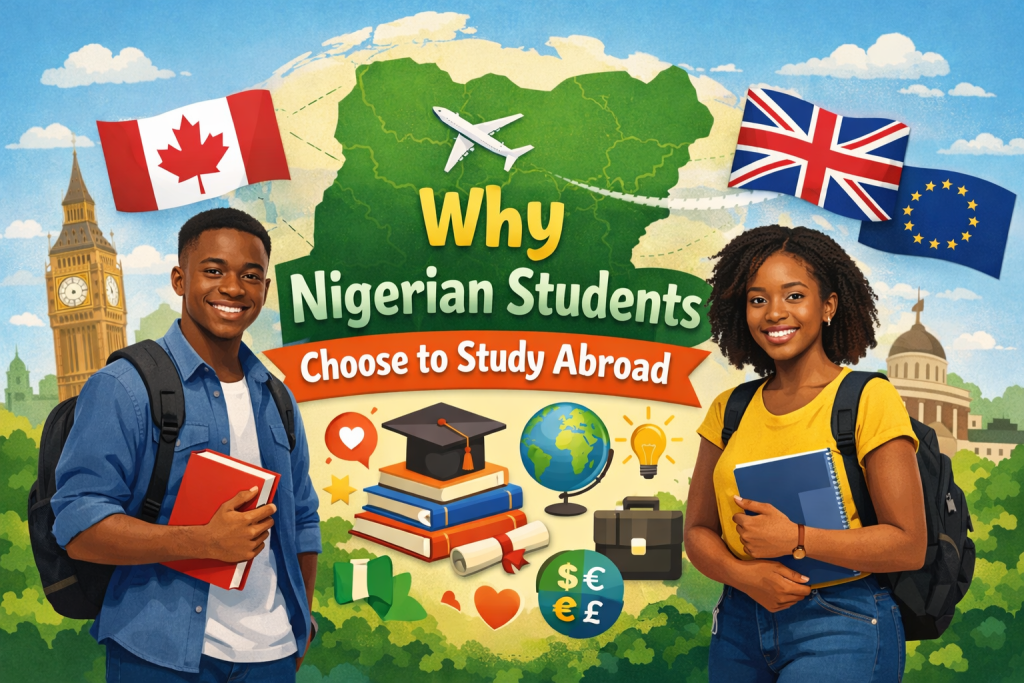
Step-by-Step Guide: How Nigerians Actually Win School-Based Scholarships
Step 1: Be honest about what “funded” means for you
When people say “I want fully funded,” what they often mean is: “I just don’t want this to destroy my family financially.” That’s fair. But you need clarity. Some School-Based Scholarships cover full tuition. Some cover a portion. Some cover living support. Many cover something useful, but not everything.
If your budget is tight, plan from the start to combine funding sources responsibly: scholarship + savings + family support (if possible) + legitimate education loans + legal student work rules (where allowed). Canada lists a student/education loan from a bank as acceptable proof of
financial support for a study permit.
Step 2: Pick programs first, then match scholarships
This is a simple “why”: scholarships are usually tied to admission decisions. Many schools won’t even let you access certain awards unless you are admitted
or you apply within the admission window. So choose programs you genuinely qualify for, then locate funding inside those schools.
Step 3: Understand how universities categorize scholarships (so you don’t miss the easy ones)
A lot of Nigerians only check one page called “International Scholarships” and stop. That’s like entering a supermarket and only checking one aisle.
Department awards can be less crowded because fewer people dig that far.
Step 4: Build one strong scholarship pack (and stop rewriting from scratch)
Think of your scholarship pack like your “application toolkit.” Once it’s solid, you only customize 10 – 20% per school, instead of exhausting yourself
rewriting everything. This also improves consistency: your story, your CV, and your achievements will align.
Real example: Chidinma (from Enugu) wants an MSc in Data Science. She writes one master personal statement and then customizes one paragraph
per university: “Why this school” + “Why this program.” That single habit saves time and makes her applications stronger.
Step 5: Write essays that sound like a real person, not a motivational poster
Scholarship teams read thousands of essays. What stands out is not “I am passionate.” It’s evidence:
a project you built, a problem you solved, a community initiative you led, a research interest you can explain simply.
A strong essay answers: Why you? Why this course? Why now? How will you use it?
Step 6: Avoid the “avoidable rejection” mistakes
- Late applications: start early; applying late means competing with the biggest crowd.
- Weak referees: choose referees who can describe your work with examples.
- Generic personal statements: include specifics (projects, impact, outcomes).
- Ignoring requirements: if a scholarship says “top 10% of class,” don’t guess verify.
Step 7: Don’t ignore visa funding realities
Scholarships are not visas. Even with funding, you still must meet official rules. The UK publishes monthly maintenance requirements for students.
The Netherlands requires you to show sufficient income for 12 months and to show income each study year.
Germany explains the blocked account concept and that it must have sufficient credit unless other proof is provided.
Data Table: Scholarship Types (and where to find them fast)
| Type | What it usually covers | Where to find it | Best for |
|---|---|---|---|
| Entrance / Admission | Tuition discount or fixed award | Scholarships → International/Undergrad | Strong grades + early applicants |
| Competitive merit | Higher tuition support, sometimes full tuition | Prestigious awards / Leadership scholarships | High achievers with evidence |
| Need-based bursary | Partial support | Financial aid / Bursaries | Clear financial need |
| Department / Faculty | Varies; often less competitive | Department funding pages | Strong program fit |
| Partner / Donor awards | Can be large | Funding / Partner pages | Leadership + strong story |
Country Breakdown (What’s realistic for Nigerians)
Canada: strong awards exist, but plan for living costs
Canada has well-known university awards and many smaller scholarships. The practical challenge for Nigerians is not only tuition it’s also living costs,
insurance, and proof of funds. Canada provides official guidance on acceptable financial support documents, including education loans from banks.
If you want a strong Canada route, focus on schools that have clear international scholarship systems like:
Sponsor: University of Toronto – Pearson Scholarship
and
Sponsor: UBC – International Scholars Program.
UK: many scholarships exist, but full funding is rarer from universities
The UK has many scholarships, but a lot of them are partial tuition reductions. Still, they can make a big difference.
For example, the University of Manchester states it offers Global Futures awards totaling more than £6 million for international students starting in September 2026.
UK visa funding is strict. The UK government publishes the monthly maintenance requirement and explains that students must show enough money for living costs. Read it yourself and plan early don’t wait until you already have an offer.
Europe: great value, but paperwork and proof-of-funds matter
Europe can be a smart strategy because tuition can be lower in some places but the application process can involve stricter document standards,
residence permit rules, and insurance expectations. Always follow the official immigration source for the country you choose.
Two important official examples:
- Netherlands: IND says you should have sufficient money to live and study for 12 months and you must show income each study year.
- Germany: German Foreign Office explains blocked accounts must have sufficient credit unless other proof is provided.
If you’re targeting elite European institutions, ETH Zurich’s ESOP page clearly states it covers full study and living costs during the master’s, but it’s highly competitive.
Data Table: Visa Funding Reality Check (Official Sources)
| Destination | What to plan for | Official source |
|---|---|---|
| UK | Monthly maintenance requirement varies (London vs outside London) + proper financial evidence | Sponsor: UK Government (GOV.UK) – Student visa money requirement |
| Canada | Multiple acceptable proofs, including education loan from a bank | Sponsor: Government of Canada – Proof of financial support |
| Netherlands | Show sufficient funds for 12 months and show income each study year | Sponsor: IND (Netherlands) – Income requirements study |
| Germany | Blocked account must have sufficient credit unless other proof is accepted | Sponsor: German Foreign Office – Blocked account (Sperrkonto) |
FAQ (Quick Answers Nigerians Ask)
Are School-Based Scholarships real for Nigerians?
Yes. Nigerians win them every year, but many are competitive and some are partial tuition awards.
Do I need an agent to apply?
No. Most applications are done directly on official portals. If you get help, still read the official instructions yourself.
Can I get a visa with a partial scholarship?
Often yes, if you can show you can cover the remaining costs through savings, sponsors, or a legitimate education loan (depending on the country). :contentReference[oaicite:14]{index=14}
Will a scholarship guarantee my visa?
No. There is no guarantee. Visa approval depends on immigration rules and your documentation.
What fields are usually strong for funding?
It varies, but strong candidates in tech, engineering, healthcare, finance, sustainability, and public policy often find more opportunities especially when they can show real projects and measurable impact.
What is the biggest reason people get rejected?
Generic essays + weak evidence + late applications. Strong applicants show proof: projects, leadership, impact, and clear goals.
Final Advice (realistic, no hype)
If you take one thing from this article, let it be this: you don’t need magic, you need a simple system and the discipline to execute.
Apply early, build your scholarship pack once, use official links, and plan your funding gap honestly.
Also: protect yourself from misinformation. If a scholarship link is not on an official sponsor/university site, treat it like a rumor until proven otherwise.
Author Bio
Author: Travel and Tour Nigeria Research Team
We publish Nigeria-focused study abroad and scholarship guides built from official university pages, government immigration portals, and verified sponsor websites.
Our content emphasizes transparency, realistic planning, and safe, legal application steps (no shortcuts, no document tricks).


 Chiprince


 Lucky Okezie